

Despite the conversation around women directors having focus towards prestige and arthouse films, from Chantal Akerman’s Jeanne Dielman to the unfortunately rare Oscar winner, there is still a niche that remains ignored: genre films. If women-directed transgressive films are explored, it tends to be through its themes; they are the arthouse and experimental films. There may be the specific niches such as Bikersploitation, Nudie Cuties, and Softcore, but even the general Horror and Action films are undervalued. Doing a deep dive into the history, and niches of the overall women-directed lists, I have compiled a list of some fantasticl women-directed genre films that deserve a place in the canon of niche cinema.
Assault of the Killer Bimbos (1988) – Anita Rosenberg
When the Bimbos Are the Smartest People in the Room

Anita Rosenberg’s Assault of the Killer Bimbos is the quintessential example of the genre many critics and cinephiles alike would refuse to acknowledge due to the people involved. This is written by both the director Anita Rosenberg and Ted Nicolaou. It includes not only Ted as one of the Full Moon Productions regulars, but also the infamous David DeCoteau. These names should immediately set the film’s overall tone. It follows two dancers that are framed for murder, and go on a long car ride chase which involves a waitress joining them, and trying to cross the border into Mexico.
What makes this special is that because of the usual Full Moon people involved, this aims for a film sincere in its utmost absurdity. The humour is crass, with bad acting thrown in for measure to help set a certain tone for the film, especially amongst the male characters. The women leads are more level-headed, yet quite absurd in their antics, including covering cars windshields with their bras, or doing the class makeover montage in the desert. In the end, because this is women-directed, it gives an almost slice-of-life approach during all the absurd antics; it provides depth to the women characters, and despite them being bimbos, the men act even more like a bimbo. It provides a fresh take on this niche as most tend to avoid the campier tone. Basically, if you enjoy the lighthearted crime film, and the tropes of 80s women-led cinema, yet want something that revels in its absurdity, then this film is worth your time.
Dark Angel: The Ascent (1994) – Linda Hassani
When Hell Meets Wholesome: A Goth Romance

Unlike the last entry, this one is produced by Full Moon Productions, and it revels in an unexplored niche. It takes the plot of the most unholy of couples, and because of this it boils down to an surprising yet cute romance. It follows Veronica, a demoness who finds herself not suited for hell, especially for torturing souls. She ends up having an adventure to the surface of the Earth with her pet dog, and meets a doctor who both fall in love with each other in the process. It comes down to both of them having incredibly different lifestyles, yet it shows an surprisingly entertaining and romantic case of assimilation. She likes to take him to a pornographic theatre as a date, rips open a leather couch to make her own outfit, and her dog eats human hearts. During all of this, she becomes a vigilante that gruesomely kills people as an act of justice.
As it is directed by a woman named Linda Hassani, it has a much more humanistic touch to it than usual, despite the horror-adjacent twist. Because of this, it ends up becoming essential in the 90s goth niche, especially for ones that aim for a wholesome example. Full Moon Productions tend to aim for cozier gothic horrors, with this and the Subspecies series being vital for 90s gothic horror films. It is impressive when you consider the contrast with the gore with the overall vibe of the film. In the end, if you love the goth vibe, or are a fan of horror, this is going to be a cute film to watch, especially with a date.
Blaze Starr Goes Nudist (1962) – Doris Wishman
A Colour-Coded Cutie: Doris Wishman’s Gentle Exploitation

When it comes to Wishman’s work, it was hard to choose her most representative film. It boils down to a few movements she was involved in. There were the Nudie Cuties, which are ones based in nudist camps, yet have an innocent, pseudo-documentary feel to them. Her roughies aim for the borderline torture of women, yet done in a way to establish pathos for them. Finally, there was her attempt at a slasher horror, resulting in the dada-esque masterpiece A Night to Dismember. However, as that film felt more unintentionally so, due to complications, I felt that this film, Blaze Starr Goes Nudist, as her essential entry in her filmography due to its overall vibe, and how it works in retrospect.
As it is a Nudie Cutie, it is full of filler. Lots of people simply hanging out and doing various activities, no matter how illogical. They’ll pick up strawberries from the ground, or the women would just bounce up and down on a pool for their breasts to move. There is a simple reason for why I loved this film: the colours. Blaze Starr always wears red. From her hair down to her usual dress. Because of this, red is accentuated within the theme of the film. This involves the chairs in the theatre that advertises the nudist camp, and some of her furniture. This also works incredibly well as a time capsule. The cars, the home layouts, the appliances, and the furniture are all fascinating to watch. Ironically, the nudity of this film is the least important aspect; the more innocent vibe, the time capsule quality, and the fantastic use of colour, is what made this such an engaging film to watch. Vinegar Syndrome has done a fantastic job with its restoration, for they are the main reason this film is gorgeous for early genre films.
Blood Diner (1987) – Jackie Kong
A Fine Line: Managing the Madness of Low-Brow Gore
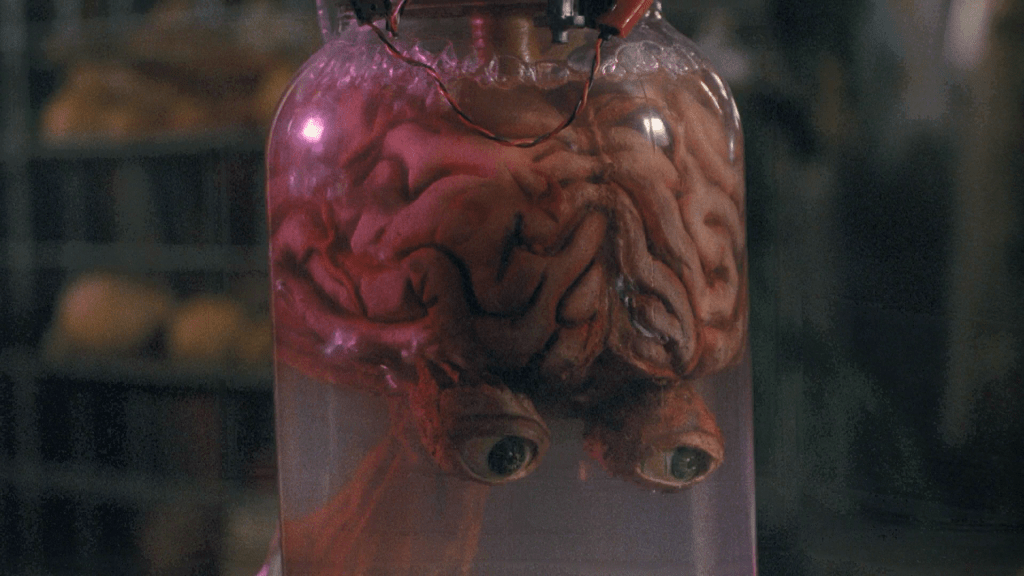
Moving into the low-brow splatter comedies, this is perhaps the most surprising and polarizing entry in this list. This was initially meant to be a spiritual successor to Herschell Gordon Lewis’ Blood Feast, and the connections to that film are apparent. It follows two brothers who are descendants of an ancient civilization, and with the assistance of their uncle’s brain, he guides them into resurrecting a goddess by using body parts of other women. This is simply a horror comedy at its dumbest, and it is almost exhausting with how over-the-top and absurd the overall film is. Jackie Kong simply goes into areas for horror comedy that weren’t seen before, and felt more akin to the later surrealist comedies. It almost felt like a Troma film. The comedy also tends to fall into the gross-out niche, and the combination of that with its absurd nature makes for a fast-paced, hilarious, yet crass experience. With 80s horror comedies, there is a very fine line between entertaining to grating. Despite elements that should push it towards the latter, Jackie utilizes her skills to ensure that it stays in the former no matter how low-brow it gets. It shows her impressive talents to ensure that the line is never cross, despite it being as close as possible.
Play Nice (1992) – Terri Treas
The Detective, the Serial Killer, and the Comedic Climax
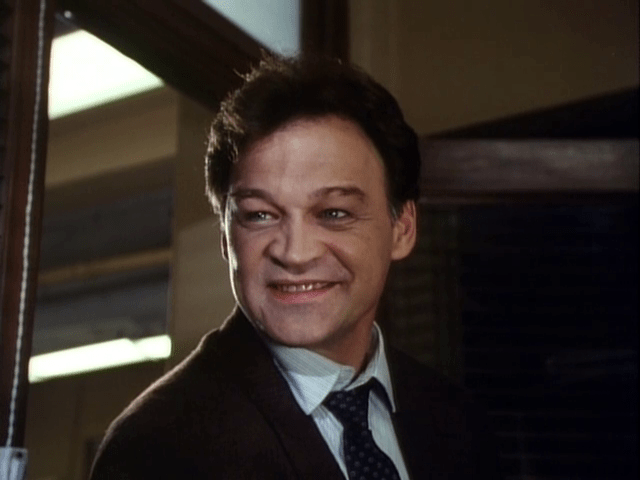
One niche that I felt was worth exploring were women-directed softcore and erotic thrillers. Of course the vast majority of them are directed by men who aim for the more objectifying yet admittedly erotic style. Seeing how a women would treat this genre always piqued my curiosity, and this entry felt like the perfect example of how they could utilize it into creating something really special. In fact, I would say that this is my favourite of the niche. There is a serial killer on the loose who has sex with men and shoots them in the mouth as the “climax.” It then follows a police procedural of trying to find her and her motive. It was a compelling use of sex in this film as the gun can be seen as phallic, and how the men ends up dying during the “climax” shifts the power dynamics.
The first subversive aspect comes to the casting choice. The protagonist detective, who yes, is considered the “hunk” of the film, is Ed O’Ross. He provides a fantastic choice for this as he fits the overall vibe of the film, yet he is the last person you would think of for softcore. It makes for some hilarious sex scenes between him and his newly found love interesting. The other aspect that makes this special is the fact that I am convinced this is parody. Its humour felt akin to a film like Naked Gun, albeit more explicit. The humour is crass, random, yet never feel out of place no matter how serious the procedural part gets. As even the sex scenes are a joke, this felt subversive for the genre as even the eroticism is no longer objectifying. Terri managed to balance out these aspects very well, and no matter the content of the film on the screen, you will find yourself laughing. Its overall comedic nature felt right at home for me.
Bury Me an Angel (1971) – Barbara Peeters
More Than Mayhem: The Human Side of the Open Road

This was made during the trend of bikersploitation films, and it initially seems like a film that fits well into the mold. It opens with a murder of a man, and his sister going on her motorcycle for a journey towards vengeance. On the surface level with its plot and the fact that the protagonist, played by Dixie Peabody, who could be described as Amazonian, seems like it would subvert the tropes with the gender power dynamics. Although that is the case, with her picking bar fights, being the most dominant of the group, and her 2 male friends just being along for the ride, it also subverts what the bikersploitation genre is as a whole.
Surprisingly, this film takes a much more low stakes approach. Their journey is quite uneventful, and even relaxing. It is seen more as a film about alienation amongst them, and the people they meet along the way who despite their alienation, they can still click with, or find ways to work around them. Practically every single character here is fleshed out, and the writing includes realistic dialogue, and shows the characters depths to the point of exposing their flaws, thus making them more like human beings. Combine that with the low stakes environment, and it becomes an contemplative yet slice-of-life film. I particularly enjoyed the two male friends as well. They engage in a lot of teasing, even when she’s skinny dipping, but they never go beyond the friendship way. They never express any interest in just presenting to be friends so that they may sleep with her. However, the ending is a shocker as it goes back into its nihilist roots of what the purpose of the journey was in the first place. Barbara managed to incorporate multiple moods throughout this in an extremely effective manner, thus making this film essential.
Fatal Exposure (2025) – Sam Coyle
Tubi’s Twisted Gothic: Exploitation for the Gen Z

This may seem like a baffling choice; it is made this year, is a tubi original, and doesn’t seem like a genre film on the surface. It also contains many elements of what makes a bad film, such as some atrocious acting, and night and day scenes changing concurrently. However, the modern day Lifetime films follow the formula of classical exploitation cinema, and this company, Marvista Entertainment, takes it one step further by incorporating explicit elements into said classical formula.
This film consists of the following movements: The 1960s gothic horror, the 1990s erotic thriller, and 2020s “booktok,” otherwise known as the 50 Shades of Grey style novels. By taking all of these styles, and utilizing the tropes of them, it makes for an experience that is both baffling yet predictable. It hearkens the air of mystery, atmosphere, and setting of the classic gothic horror, with some elements being reminiscent of the Hitchcock’s Rebecca. It utilizes the erotic thriller tropes of the neo-noir elements mixed in with truly disturbing sexual under/overtones to the point that it aims for a psychological focus on its power dynamics. As this deals with the current day Gen Z tropes for its plot in terms of sex, it comes down to the simple concept of “daddy issues.” In the end, this film was truly twisted in its approach, and I believe that having a women director made this even more disturbing as she was able to utilize her being systemically in the minority for power dynamics, making for a more sincere picture of how it can affect them. This film just simply took it to its most disturbing extreme. Add some so bad it’s good elements to this, and it’s a wild ride.
Punisher: War Zone (2008) – Lexi Alexander
The Grimdark Comedy: Adding Camp to the Comic Book Carnage
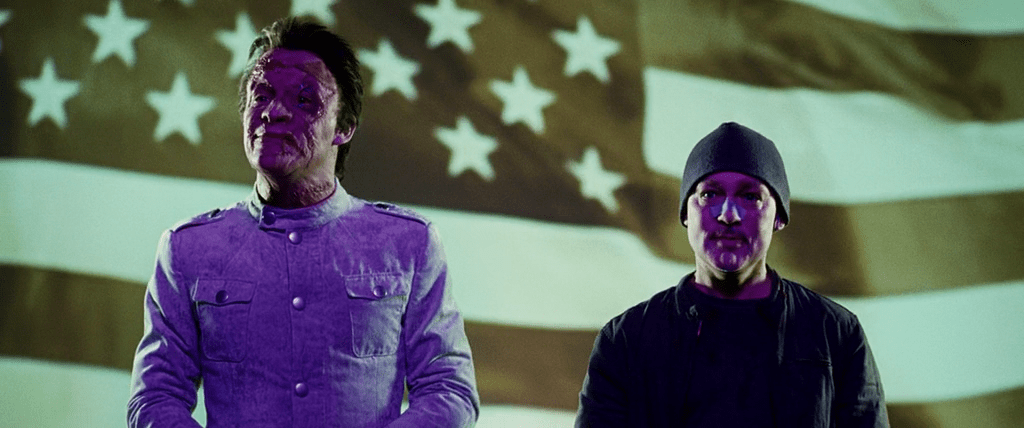
Superhero films were always fascinating to me. It seems like the ones that garner the most hatred are the ones I enjoy the most. Joel Schumacher’s Batman films were ones that provide just the right amount of camp, with fantastic hammy performances by the villains. This film, despite the veneer of The Punisher being his usual vigilante self, down to the extreme gore, felt akin to the over-the-top nature of Schumacher’s films.
In this film, Frank Castle wants to defeat the mob boss Billy Russoti. He believes that he has accomplished the job by throwing him inside a machine full of broken glass inside a factory, yet he still survives. As he is completely disfigured, he has his villain origin story, with his new name being “Jigsaw.” He then helps his cannibal brother escape from the psych ward, and both of them create chaos amongst the city, until Frank heads out to defeat him.
The over-the-top nature comes from the two casting choices. Ray Stevenson plays this as straight-faced as possible, yet, it’s done in a way that elicits comedic reactions from the audience as he manages to keep that serious expression no matter the situation. It felt akin to the characters that Jason Statham would usually play. However, the highlight goes to Dominic West who plays Jigsaw. It’s very rare to find a villain as Hammy as him. His Brooklyn accent is simply perfect, and he balances out taking the content and gore of the film seriously while making the very concept of his character as stupid as possible. This ends up being an entertaining romp as Lexi shows how to add just enough camp factor to the “grimdark” dynamics, making for a fun contrast.
Viva (2007) – Anna Biller
The Propaganda Trap: Falling for the Exploitation Formula
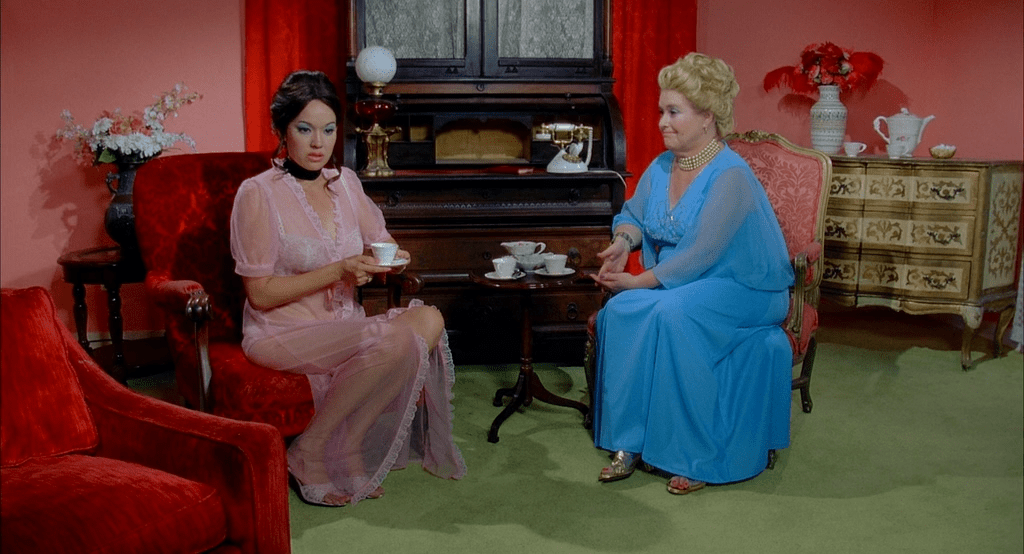
On the surface this may be seen as another Nudie Cutie; however, this is the apex of what a parody should consist of. It reminds me of the work of Larry Blamire, and like him, she aims for parodying multiple genres of the era. Not only is there the inevitable nudist camp, but she handles the classical exploitation formula of the 50s era down to a tee. Exploitation films of the era are meant to fearmonger the audience. They are supposed to show how personal pleasure may come across as regression, but will lead to disaster, and that the true lifestyle is returning to the nuclear family. This film takes the lead, Barbi, into every single trope of hedonism, regardless of what era they are based in. She joins the hippies at one point, becomes a bisexual, gets into S&M, and tries to find the right boyfriend to take advantage of, despite being married.
With this, it has the same acting style of a Larry Blamire film. It’s lifeless yet over-the-top, and the dialogue is unrealistic to the point of hilarious absurdity. The contrast between the two makes for an even more effective use of humour. The overt nature of sex is amusing as well. Down to a man having lips as his landline telephone, or having signs that say sex everywhere. Even though the film deals with heavy topics, such as multiple rape scenes, Anna makes for a plot where the vibe does not get ruined, despite you being invested in Barbi and trying to root for her to find her way out, even if it means returning to the patriarchy. She accomplished something brilliant. She basically made patriarchal propaganda that is well known amongst classical exploitation films, and she can make the average viewer fall for it.
Of course, this rabbit hole is far from over. I believe the films listed here is a strong starting point, yet it being incomplete shows the depth of genre films, and the lack of acknowledgement of not only women-directed genre films, but ones in general.
 Auteur Outlier
Leave a comment