

The most interesting art is one that falls into either extreme. They are the polarizing films. They can become even better if you are unsure of the art’s intent. Was that film meant to be a parody/satire? Was this meant to be a work of subversion? Was everything just accidental? These questions can be impossible to answer, especially when it comes to aspects such as camp vs kitsch, and especially when breaking it down to the elements.
I became curious about exploring more of these types of films; however, there was a certain genre I wanted to avoid: horror films. I find that these sort of gaslit-esque approaches to films in their (un)intentional intent to be too commonplace for that genre. It is more of an interesting rabbit hole to seek out a handful of films that fall into it, with some not even being a genre film, but ones that were meant to be taken seriously. After this rabbit hole, I have come up with this list of five films. As a side note, I will ignore Showgirls as it is now considered a canonical film, therefore the satirical analysis is commonplace.
Death Warrior (1984) – Cüneyt Arkin and Çetin Inanç
Where B-Movie Meets Brakhage: The Formalist Chaos of Death Warrior
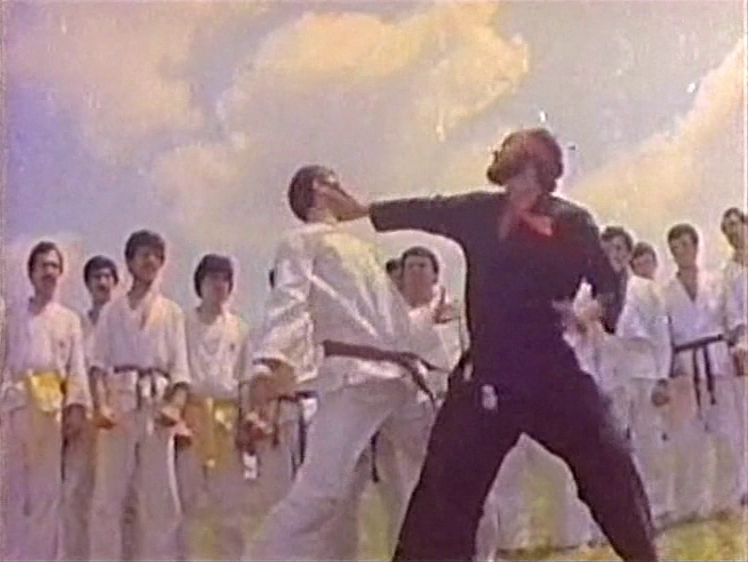
I have previously covered this film, which you can read here.
While on the surface it is a by-the-numbers low budget martial arts film about a Turkish cop fighting against ninjas, this is the most compelling and dense film in this selection due to its distinction as a collage-film – one that is reminiscent of a Brakhage film, or what I called it, “formalist chaos.” The director Çetin İnanç alongside the lead Cüneyt Arkın are a common combination, creating many ‘bootleg’ films that use footage from other films (The Man Who Saves the World, otherwise known as Turkish Star Wars, is the most popular example). Death Warrior pushes it into avant-garde territory. It is an act of creation through destruction. The film reel itself is decaying, footage loops in rapid succession, sound effects from other films are used with a complete disregard for accuracy in terms of effects and timing, and heavy colour effects give a distinctive yet chaotic feel when contrasting with the film’s original footage. It can feel too long due to its dense nature, the quality is low, and the subtitles are machine translated, yet it perfectly delivers the style I look for in a film. It may lack the emotional appeal, but it is the apex of the visceral experience of experimental cinema, contrasted with the surreal nature of combining it with the b-movie. In its nature, the visceral experience is one that provides an emotional impact, and despite a lot of the film creating moments of confusion, it creates a package that is memorable.
Collateral Beauty (2016) – David Frankel
The Nihilistic Embrace: How Collateral Beauty Accidentally Subverted the Inspirational Drama

Perhaps one of the most interesting pieces on here. It is a Hallmark-based film on its surface, rendering therapy as the use of manufactured, and banal catharsis; however, it is a full drowning in cynicism. In terms of its form, aside from a few scene transitions that are cleverer than the average film, this is exactly what you’d expect in a middlebrow, Oscar bait film. The content is the same on the surface. It’s a story meant to inspire the viewer, with it utilizing every Hallmark trope until it becomes a pessimist’s nightmare. Many of the actors, most notably Will Smith, reach levels into overacting to make his performance award-friendly, that the only rival could be Bradley Cooper.
The shock comes into how they present the content. It basically has an incredibly nihilistic message, whether it’s intentional or not. If the viewer finds this inspiring, they are simply ones that fall for the inspirational arc. They don’t care about the toxicities of many journeys that may be done through other methods. Through this, it comes across as one of the most subversive films in recent memory.
Basically, they do the most extreme form of gaslighting to a man grieving the loss of his child. He mails letters out to concepts: Death, Time, and Love. During this, his coworkers that want to sell the company, devise a plan to make him appear mentally ill to a lawyer, thus rendering him not mentally sound enough to continue working. They then hire actors to pretend to be those very concepts. They are to follow him and converse with him just like the tropes of these very films. However, this is more realistic. Using editing, they remove these “concepts” from the camera that a private investigator was recording with, making him look like he’s rambling to strangers.
It is through this that he reaches his arc. Upon thinking he’s insane, he turns to his coworkers and gives in and signs his release forms, wishing them great success and praises them for their strengths. He also seeks out all the therapy that he needs to move on. The co-workers, despite their immoral actions, also receive their positive arc, while each has their own major, Oscar bait-esque issue, that they are suffering through.
Its message consists of bold filmmaking. To use the very tropes of inspirational films meant to promote the good of the world, and throw them into the very depths of hell, it becomes a fascinating film. To use immorality to promote a moral message. The way to try to cope is to see the beauty in the world no matter what made you see it. Not through the use of natural events such as trauma, loss, and grief; rather, human-driven events that were meant to personally gaslight you. It would have worked wonderfully for the toxic positive population, yet the film was received well and was a box office success. This means that the viewers may not even care about the journey in life, just as long as they are happy. The true face of selfishness.
Ghosts Can’t Do It (1990) – John Derek
The John Derek Self-Insert: A Case Study in Psychoanalytic Camp

Like Collateral Beauty, this is a film that goes beyond the veneer of good intent, aiming for a cute romantic comedy. Beneath that veneer is an incredibly disturbing piece of art. Looking beyond it and seeing the life of the director, it becomes apparent that it is meant to be a self-therapeutic analysis of his morality, and he found the worst way to showcase this.
This is directed by John Derek, starring his wife Bo Derek who is 30 years younger than him. Katie, Bo’s character, is married to a much older man Scott, played by Anthony Quinn. He commits suicide after surviving a heart attack and refuses to face the near end of his mortality. In the afterlife, he makes a deal with an angel to see Katie as a ghost and concocts a plan. She must find a man that is perfect in a sense of being physically appealing, kill him, and then Scott will use that time window to possess his body. During this, she also must take over Scott’s company, and work with other businessmen such as a cameo by Donald Trump. Shockingly, Trump is the most normal part of the film.
Throughout this, Scott constantly interacts with Katie, laughing in a menacing manner during his monologues, and constantly cracking awful jokes akin to comedians such as Rodney Dangerfield. You see him in the same camera angle, with a brown background, with the foreground being a water filter with a low opacity. The strangest aspect of this is that Katie can not only hear Scott, but she constantly interacts with him by speaking out loud. During this, the other characters are aware that she is speaking to someone. She always responds to this by saying she’s speaking to the ghost of her dead husband, and the characters call her insane and then proceed to still treat her seriously, or just completely ignore the fact in the first place. During this, therein lies most of the comedy. The type of jokes they say back and forth to each other are incredibly absurd to the point that it comes across as an intentional surrealist comedy. Many strange jokes on topics such as rape, and her yelling at Scott on how to swallow poisonous pills that a henchman is forcing her to take, while he hears every single word, yet still ignores her strategies.
The psychological aspects are due to John Derek. As he is 30 years older than Bo, he too must have faced the near end of his mortality. He must find a way to continue this relationship with her. It is even in a controlling manner as Scott as a ghost still tells her what to do every step of the way and she gladly listens to it. John always finds a way to utilize nude scenes of her as often as possible. With the perfect body aspect, that is his sense of the physical perfection he wants for her. The film goes far beyond the point of logic where she would rather go to hell and murder a random man to spend a few decades with him in another body, instead of spending the afterlife with him for eternity. However, this approach makes sense due to the self-insert psychological aspect. He wants his wife Bo to be that obsessed. He wants her to ruin her own life to live with him for a bit more.
As a film, this is a romantic comedy at its most toxic. It is one of the utmost contempt for the lead Katie. However, this is one of the more interesting cases of psychoanalysis in film. Looking at how he treats himself, and his wife, makes for a much more in-depth approach to a film like this. Knowing the background story must be required, but if you are the type that enjoy Tim and Eric style humour you may still get something out of the surrealist nature of this, if you don’t mind every male character to be creepy.
Torque (2004) – Joseph Kahn
Bollywood with Hollywood Characteristics: Torque as an Exercise in Exhaustion

Torque was not received well, being brushed off as a film akin to the carsploitation movement at the time, set forth by The Fast and the Furious series. However, I believe this goes beyond that subgenre and movement, despite the tropes. This is more akin to using the modern-day Bollywood formula, yet one that appropriates it by utilizing Nu-Metal characteristics of Hollywood. As a reference to the PRC’s view on socialism, this is “Bollywood with Hollywood characteristics.”
In this film, a biker named Cary comes across drugs in a group of motorcycles and is framed for murder by the leader of the criminals to have both the criminals, and the police, chase Cary so that they may retrieve the drugs. It is the standard fare of action cinema, yet it is due to its stylized aspects that upholds it to a higher standard.
Like motorcycles, this is high-octane cinema. It utilizes nu-metal flourishes at a constant degree that it becomes an exercise in exhaustion, but it stays fresh because of how frequently they use different aspects of editing, and settings. It is a film where like Cary’s jacket says *Carpe Diem,” is one that lacks any sense of subtlety.
With Bollywood cinema, they are meant to have an overwhelming use of style, musical numbers no matter how incoherent they are with the overarching plot, a romantic angle which may also be illogical, and the combination of action and comedy. They also tend to differ by having a longer runtime, which Torque lacks. However, this film falls into every other aspect, at least to an extent. The characters may not do musical numbers, yet the needle drops are constant and overwhelming. The visual style goes beyond what may even fall into Hong Kong cinema and is the main factor of this film. With Hollywood action films, there is a lot of downtime to make for a more dramatic angle, and it is mostly ignored in this film. The comedy is there, yet it falls into the “funny black man” trope. There is also the illogical romance of someone who clearly shouldn’t be there amongst the chaos.
Although it may fall into the counteractive point of this just being a hyper-stylized Hollywood film, I believe that this can be refuted by the final action sequence. It is unlike anything you’ve ever seen and goes into the most absurd of CGI-use, stylized camera angles, the incredible sense of speed, and the action coming across as comedic due to its over-the-top nature. It felt akin to the fight scene in Eega. Simply put on top of every element that connects between the two regions, it all encapsulates in the conclusions for action cinema, and this drifts far beyond the Bollywood angle as opposed to Hollywood.
I, The Jury (1953) – Harry Essex
Jury’s Out, Sanity’s Gone: When Hard-Boiled Noir Meets Absurdist Comedy
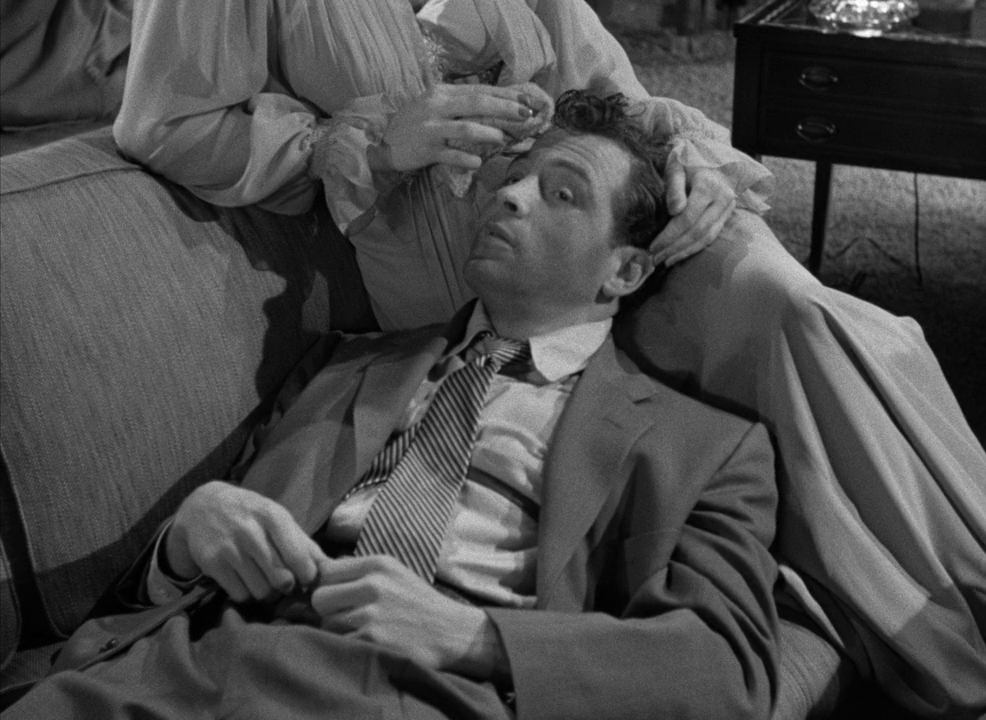
A fascinating title as it received lower ratings upon its release and is still considered that way in retrospect. However, it is now low enough where it garnered a reputation for an entertaining bad film. That is a shame as this film contains some incredibly absurd aspects. This felt bad enough to watch that I felt it must have been a parody all along. The revelation was when I was talking to a friend about it, and he mentioned that the protagonist Mike Hammer was supposed to act this way, as he acts the same way in the book. It made me think: Was this entire film intentional?
In this film a one-armed man gets murdered, and a friend who works as a PI works on the case and considers himself to be the juror and kills the man who has done it, regardless of what penalties he would receive from it. He is the strangest character which is what led to a performance where it comes across as a parody. He’s a man who uses exaggerated hard-boiled dialogue that would make one groan and/or laugh. He shoots first and asks questions after, which results in him being violent for no reason. He comes across as someone constantly drunk as well, which emphasizes the ridiculousness of his violence, making you question what his motivations are. There is only one scene of him drinking alcohol at a bar, which he doesn’t even finish, thus leading to even more questions about the character.
It then results in a vast array of odd characters. You have a horny psychiatrist, nymphomaniac twins, the standard yet exaggerated gangsters, and somehow Santa is involved in this, which felt weird despite its Christmas setting. The combination of the protagonist alongside these characters simply leads to chaos. The low budget directing helps provide this confusing sense of whether it’s intentional. Granted, the standard yet fun noir flairs are there with the use of shadows; however, the camerawork is incredibly static to the point that it felt like a D.W. Griffith film. This combination made for an essential noir that I believe is overlooked. Whether one finds it intentional, or just a hilarious bad film, is up to them.

I believe that there are many films like this. Interpretation is open to many ways, and films that are usually considered disasters may have had different intent by the directors. There are even smaller aspects, such as actors utilizing camp in a film full of kitsch so that they may have more fun in the filming process, thus making a greyer area sort of film analysis. I hope this list will inspire you to see these films and analyze them based upon your personal tastes and experiences. Art is an ambiguous space. No matter the intent, in the end it belongs to the viewer. As David Lynch would say, the film is still doing its job when people are talking about it afterwards.
 Auteur Outlier
Leave a comment