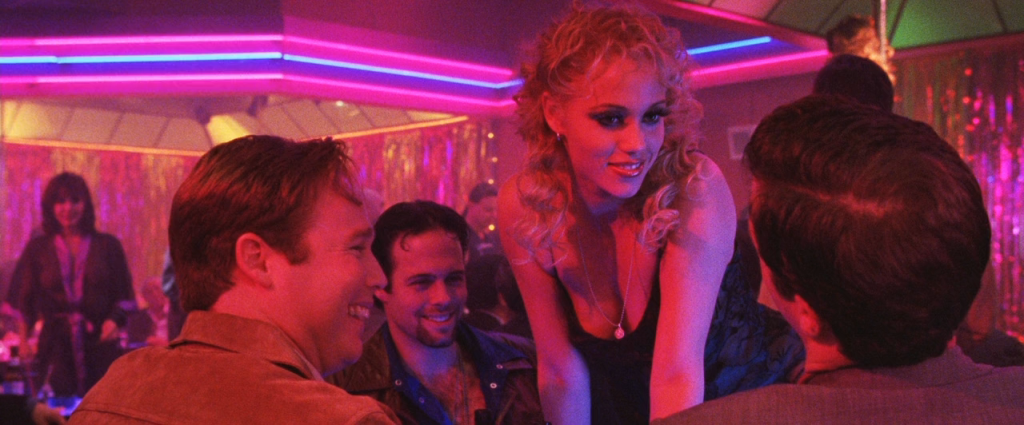

It’s amusing to observe many cinephiles, myself included, falling victim to the same journey in forming their own taste. Initially, most are drawn towards mainstream canon lists, including the IMDb, or the Letterboxd top 250. As we take the hobby seriously, the inevitable snobbery comes in, despite it being the “film bro” taste i.e. Tarantino, Nolan, and the more currently relevant Villeneuve. I found that whatever “scene” you are in shapes your taste at the beginning. The next stage falls under the “obscure cinema” scene. Finding your niche, mastering it, and flaunting it for clout to demonstrate how distinct you are from fellow cinephiles. The final stage is reaching the state of true sincerity. Not caring about the scene and focusing on whatever you like, regardless of aspects such as praise, popularity, etc.
While going through the first three stages, there was a type of film I always ignored: the “b-movie”. Any sort of genre film such as horror, action, and westerns was ignored by me. I realized that it was a glaring omission, and to continue my cinephile journey, the next step was to view those films with an open mind. Doing so was a revelation, and made my taste sincere, as opposed to seeking out the most obscure film for “clout”. As this is a blog, giving a primer on my taste would be an appropriate summary, and I think exploring my all time top ten is the best method to do so.
10. The Movie Orgy (1968) – Joe Dante

The Movie Orgy is the quintessentially honest found footage documentary. One that upholds its accuracy by showing the pop culture of its time. Gone are the romanticized, revisionist history made by the “winners,” or media that are remembered to this day that set or broke the mold of trends at the time. Although they are important in the grand scheme of things, they are not the truthful representation of the landscape at the time. It is also one that makes me fully appreciate the b-movie. It’s a four and a half hour monolith that manages to fly by and shows the earnestness of genre films, making for one of the most entertaining films of all time.
For example, the romanticized 80s films, as well as the throwbacks to films set in that period, are films drenched in neon with leather coats and synthwave music. Of course that was not actually representative. The true picture? I found the Bob Barker era of The Price is Right to be pivotal in showcasing this. The show is basically an hour-long commercial, with regular people on-screen. All the fashion is conservative, all the furniture is either brown or wicker (usually both), the silly hair, the large wire frame glasses, etc.
The true picture of the 1950s and early 60’s doesn’t consist of those legendary films. This doesn’t show the trendsetters. It follows the trend-following films, the very cringy one-hit wonders forgotten about within weeks, the game shows, the commercials, and the government propaganda. This is a critical yet earnest analysis of this era by creating a collage of said footage, giving what is THE accurate picture of this culture. It provides a huge range of emotions and reactions, going from government propaganda that aged poorly in a disturbing way, to the incredibly and hilarious dated commercials and sponsorships from media that border to the point of surrealism. Despite its monolithic length, it’s a film that flies by thanks the variety of the footage and how it is edited in a parodic way. It falls under the usual style of how Joe Dante earnestly yet critically satirizes these topics, offering the rare and honest look of the period, and the birth of his style such as films like Matinee. It also showcases the birth of his satire of suburbia American, as shown in Small Soldiers, and The Burbs. It is a film that showcases why ignoring the b-movie is a glaring omission both as an artform and for its historical content.
9. The Passion of Joan of Arc (1928) – Carl Theodor Dreyer

This is arguably the most canonical choice in this list, purely from its emotional impact onto me as the viewer, as well as its style, showing that style can be substance, and can also elevate to the substance to make an experience focused on the emotional of a film through form. I found myself drawn towards the more avant-garde style editing of the silent film era, with directors such as Epstein, Dekeukeleire, and the many directors of the Soviet Montage movement. However, there is an approach to this film that I found quite compelling. There are many details used, especially in the Falconetti’s legendary performance. The almost constant use of closeups alongside the short timespan of the plot to show her final moments was an incredibly effective method of showing the psychological aspects of her ordeal. Many contrasting moments are shown to emphasize the journey, such as a baby being breastfed during Joan’s final moment to contrast the baby’s life with her martyrdom, or the oncoming riot of the “new life” of the people spawned by her death. On top of that, the framing devices are simply wonderful. They focus on the different aspects, such as someone’s head only being in the bottom corner of a screen, but it’s done in a way to make you solely focus on Joan by contrast. By obscuring them, they stand out. I should mention that I watched this in theatres with a noise and industrial score which helped elevate the experience during its more intense moments. This marks a form of sincerity in my list as it shows my appreciation for a film regardless of its appreciation, canon or otherwise. What I tend to connect with films is the emotional reaction, and this film accomplished that in spades.
8. Death Warrior (1984) – Cüneyt Arkin and Çetin Inanç

I have previously covered this film, which you can read here. While on the surface it is a by-the-numbers low budget martial arts film about a Turkish cop fighting against ninjas, this is the most compelling and dense film in this selection due to its distinction as a collage-film – one that is reminiscent of a Brakhage film, or what I called it, “formalist chaos.” The director Çetin İnanç alongside the lead Cüneyt Arkın are a common combination, creating many “bootleg” films that use footage from other films (The Man Who Saves the World, otherwise known as Turkish Star Wars, is the most popular example). Death Warrior pushes it into avant-garde territory. It is an act of creation through destruction. The film reel itself is decaying, footage loops in rapid succession, sound effects from other films are used with a complete disregard for accuracy in terms of effects and timing, and heavy colour effects give a distinctive yet chaotic feel when contrasting with the film’s original footage. It can feel too long due to its dense nature, the quality is low, and the subtitles are machine translated, yet it perfectly delivers the style I look for in a film. It may lack the emotional appeal, but it is the apex of the visceral experience of experimental cinema, contrasted with the surreal nature of combining it with the b-movie. In its nature, the visceral experience is one that provides an emotional impact, and despite a lot of the film creating moments of confusion, it creates a package that is memorable.
7. Vitalina Varela (2019) – Pedro Costa
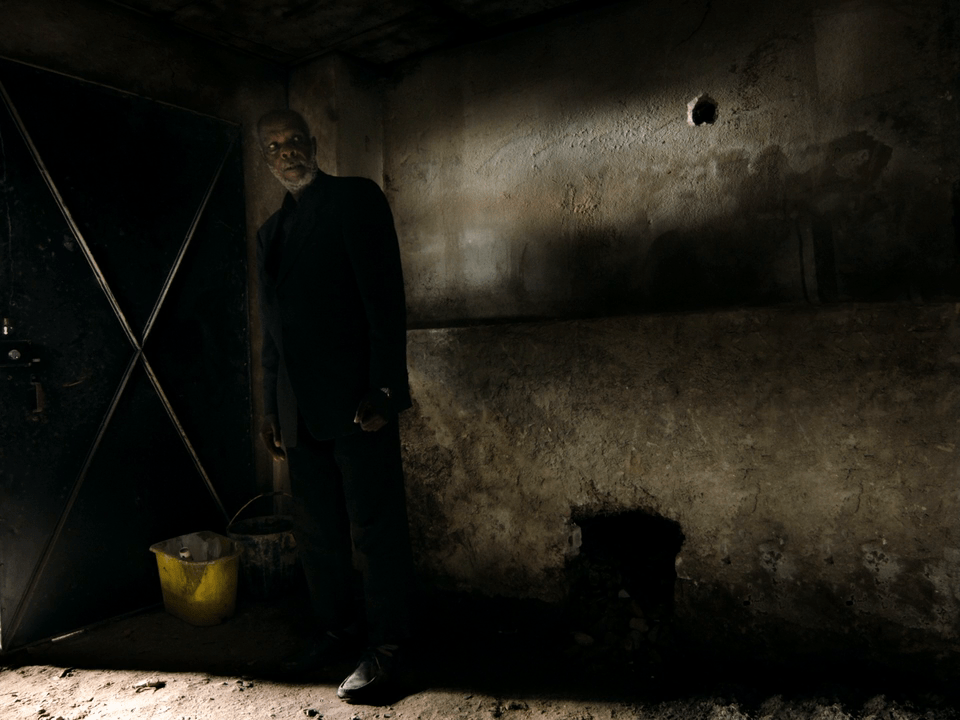
Pedro Costa aims for documentary-infused surrealism that encapsulates the struggle of the marginalized, with the most common characters being immigrants or drug addicts. The dark skies, ridden environment, and shadows reminiscent of film-noir consume the real characters trapped in the middle, emphasizing that they are in a situation where they struggle to get out of. His film Horse Money perfectly encapsulated that experience, yet this film somehow exceeds it through a different use of facing one’s trauma through comfort as opposed to facing them directly in Horse Money, showing a more interesting, original, and accurate outlook on the immigrant experience. This showcases trauma of memories who manifest as ghosts, enveloping her even more as she is lost in Lisbon. Entering a world that is not made for her and practically punishes her for doing so. The symbolism can be lost by many, and rightfully so, yet the images are ones that say enough about her and her struggles. It creates an environment for her where the use of religious symbolism is more compelling, as it showcases how the existential crises that the marginalized fate can be improved by the comfort of religious; to use that as the answer. The overall mood and atmosphere this creates envelops the viewer as effectively as it does for the characters, and like her memories, this is one where I remember the emotional experience rather than the content of the memory itself.
6. Nemesis (1992) – Albert Pyun

I have covered the film series which you can read here. This is a film that astounds me due to its lack of praise. It falls into the fine line of the low-budget action film, yet one that falls into the action cinematography’s form of a John Woo film, with the philosophical content of cyberpunk reminiscent of Blade Runner. It is a high concept, yet low-budget combination that makes for an original and intriguing experience. The first half envelopes the viewer completely solely through this use of its ethereal atmosphere. One where you feel the overwhelming heat of the setting, emphasized by the sweat dripping down the pores of all the characters, sometimes resorting to being in the nude. During this, conservations and the voice-over of the lead Alex are effective, talking about a war of man vs machine where man may no longer exist. At what point does a cyborg stop being human? Can an android still represent the humans in the war? As the android Jared says: “It takes more than flesh and blood to be human, Alex.” The shift to the second half is constant action, yet its payoff is fantastic. Simply put, it has among the best action choreography I have ever seen in a film, regardless of budget. I believe the action fans came into it for the action yet were disappointed on its philosophy. Perhaps if cinephiles go into it with an open mind: come for the philosophy, then stay for the action, then they will also have an experience as worthwhile as it was for me.
5. Crash (1996) – David Cronenberg

Cronenberg is easily one of my favourite directors of all time. I find it fascinating as most love him for his body horror, yet for me it is either his political content such as Cosmopolis, or his psychological content such as The Shrouds, and this film, Crash. The apt summary is that this film provides an outlook on the dangers of desire. Someone finding their fetish of car crashes and using sex to provide a new outlook at this triggered event. As he enters the scene, he finds himself vested into going into the rabbithole. Like the others, they need their fill of said desire, bringing them deeper into what may even be deadly. The sex scenes get more dangerous and disturbing. It uses pseudo-body horror in ways you would never imagine, making the sex scenes incredibly disturbing yet effective at showing how far they go. It has a more clinical outlook towards the sex scenes, showing that they are no long erotic, and that the characters’ desire has entered a dangerous territory. Like the car crashes, the sex also becomes mechanical. In terms of a psychoanalysis of characters, showing their personalities yet motivations, this film is top notch. It is the best look into how characters operate.
4. Showgirls (1995) – Paul Verhoeven
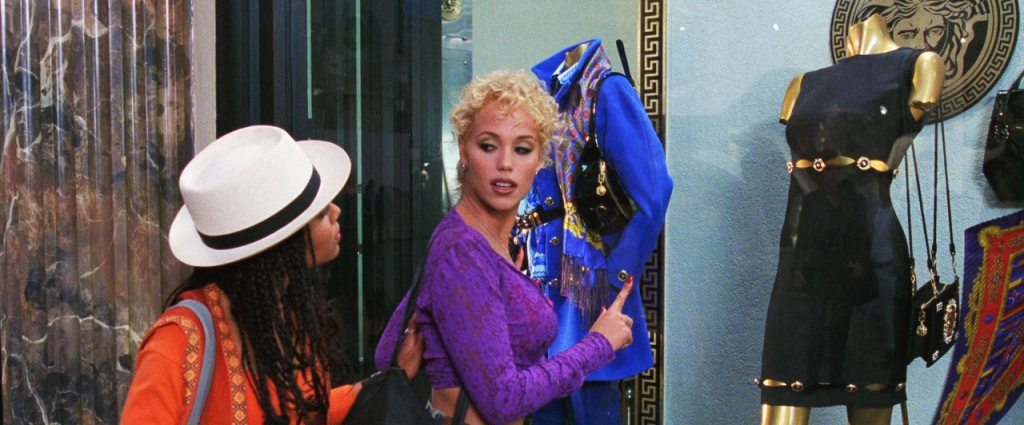
This is perhaps the most “absurd” entry in this list. This is a film that has become infamous not only for being such a high budget for an NC-17 film, but also for being considered one of the worst films ever made. However, there is a revision regarding this film. It has now entered multiple canon lists, such as the They Shoot Pictures Don’t They, and the Sight and Sound lists. Simply put, this is a film ahead of its time. It is an awkward, cringy, and unfunny film, yet those are the very points needed to express the film’s content. It is a cynical outlook at the Hollywood system, masked with the stripper scene. It shows how the industry is a dog-eat-dog world, and one where women must used their sexuality and physical capabilities to take advantage. It works in a meta sense as well. Not only does it critique the Hollywood system, but it also critiques Hollywood films themselves. Its satirical use of bad Hollywood tropes, such as the black comic relief, or the overweight burlesque comedian that keeps using an incredibly unfunny joke. It satirizes sex in the films as well, even down to the lead flopping around like a fish in a pool. By taking these tropes, and ramping them up to such an extreme, it shows how these very concepts are absurd. The most impressive aspect is how ahead of its time it is. These concepts were rarely talked about when the film came out, and it even portrayed what happens in the #MeToo movement. All the film’s plotlines are ones that the Hollywood system may have even been too scared to release to the public, and this film had the guts to show it all. Now that the truth came in, we were able to see the brilliance of this film and its pure savagery of the Hollywood system.
3. A New Leaf (1971) – Elaine May

A film quite unknown amongst cinephiles, yet one that easily falls under the apex of the safe, sincere, and entertaining choice. It is a romantic comedy of a dumb man who ran out of his family funds and comes up with the plan to marry a rich woman, murder her, thus taking her assets so that he may continue his lavish lifestyle. The lead character himself is brilliant. It takes him ages to realize the situation he is placed in with the lack of funds, is completely disinterested in sex which makes finding marriage a lot more difficult, and they show a lot of character growth with how he manipulates a woman into marriage, takes advantage of her home during the marriage, and to finally reach his arc. As there is that plan to murder his newly found wife, there is that sense of black comedy luring behind the cozy atmosphere on the surface which makes for a wonderful combination. The performance of the lonely wife, played by the director Elaine May, is simply wonderful. She comes across as the most adorable character, thus increasing the stakes of the murder plot as it ensures you don’t want anything bad to happen to her. That sense of coziness, yet that unease and slight feeling of intensity from his evil scheme, makes for an original romantic comedy that perfectly encapsulates one of the aspects I look for with comedies, omitting the incredibly low-brow humour that I enjoy as well.
2. Black Harvest (1992) – Robin Anderson and Bob Connolly
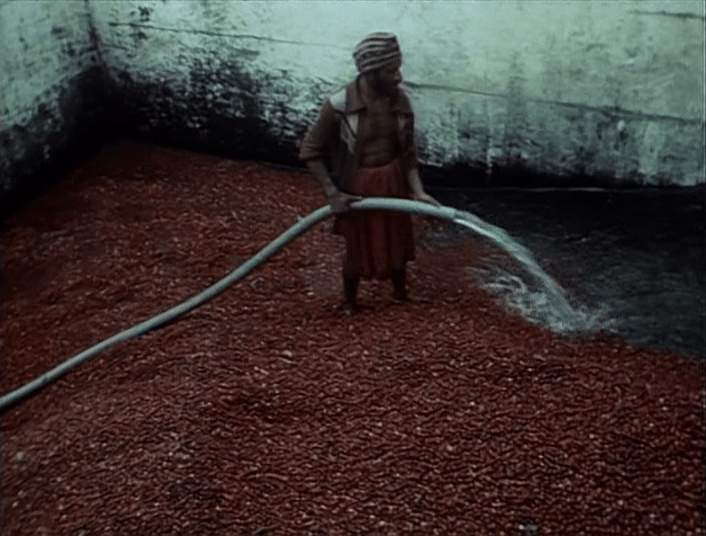
Documentaries tend to be a genre that quickly loses my interest, as many of them consist of floating heads and PowerPoint presentations. Frederick Wiseman, and other directors that use the direct cinema method, are exceptions. They make plot out of real life. They show the world the way it really was at the filming process goes on, not a visual version of a written textbook. Although this is not exactly Wiseman’s type of direct cinema, it goes under the same use of filming a plot where it feels like you are witnessing a fictional film, especially as the story they portray is at its most intense. Basically, this covers a coffee plantation in Papua New Guinea. It was meant to be a more peaceful and safer documentary about the process of growing and harvest; however, since this is real life, problems do happen. Eventually there are complications to providing salaries to the indigenous population, and the owner of the plantation is half indigenous, with his grandfather being the literal head colonizer of the country. He uses both his history of being a colonizer and still being a part of the indigenous tribe to take advantage of them. Still, the most intense part does not lie here. This tribe and another then enter a full-on war, adding to the chaos of the plantation’s failures. This creates a nail-biting experience. It would be intense enough as fictional film, yet this being real life raises the stakes to an extreme, especially when you realize that no formula will be followed as anything can happen. Although this can be too intense for some, it is an eye-opening film in terms of the issues in the region, and the wonders of how real life can be properly integrated into cinema.
1. At the Horizon (2017) – Manuel Knapp and Takashi Makino
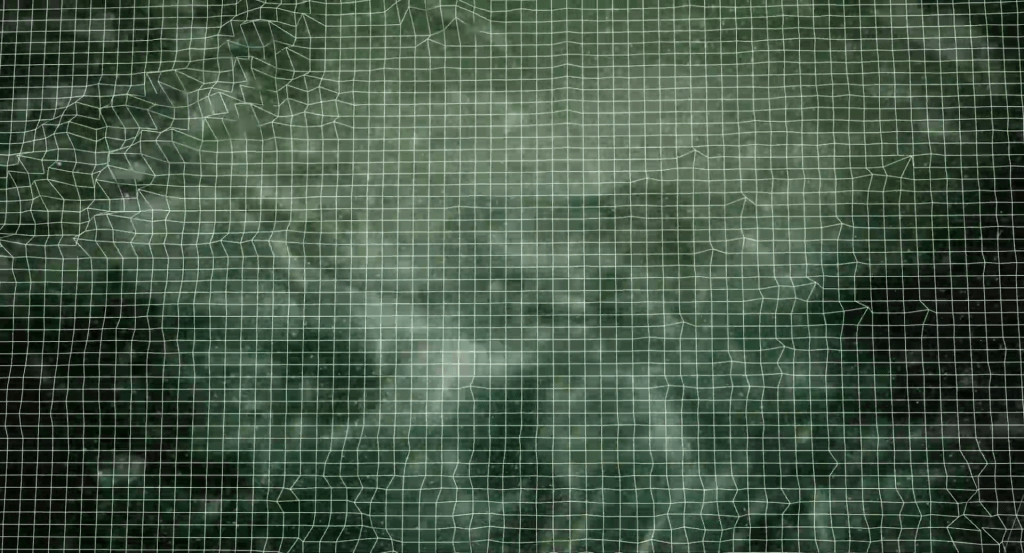
Perhaps an entry that is even more baffling as Showgirls. Not only is this a film that remains in obscurity, but it is also a short film which is a choice not many cinephiles would choose. In an apt summary, this is the most emotional and visceral experience I have ever had with a film, and it’s made even more impressive when you consider what this film is. It is made by two directors whose combination of styles would seem jarring on the surface. Takashi Makino uses the abstract, non-camera animation style of Stan Brakhage, while Manuel Knapp uses the lines and grids on the foreground, uses his specialty (you can see his arthouse here). This film perfectly encapsulates how a visceral reaction from a film, especially experimental film, can create an incredibly emotional reaction for the viewer.
This film shows the journey from one’s birth to their death. It begins with a jump scare, almost like a big bang. A single line appears with a dissonant string in the soundtrack, making what is perhaps one of the most things in cinema: a jump scare caused by a single line. As the birth begins, the line becomes more complex. More are added, and they begin to take shape. It forms a grid, moves around in its complexity, and then reverses back to their previous stages until once again, it’s a single line that disappears. With the abstract film in the background, it overwhelms the viewer, showing the mysteries of life during the stages of immaturity and the slow realization of death almost being overwhelming for someone during their journey, yet as they mature that takes precedent over the abstract. Thanks to its intense and haunting soundtrack it helps to provide the content of the film for the viewer. The intensity of a character’s growth is emphasized by a segment of noise music, then the realization of things getting better, or the growth and maturity of one in life comes when there is the introduction of the orchestra that slowly swells up and overtakes the harsh noise. It’s the most I have ever cried from a film, and for something purely abstract to achieve such a reaction shows the beauty of this film, and the talent of these directors.
This journey of my top ten shows how an eclectic taste shows sincerity. Gone are the days of canonical approval amongst the more ‘mature’ cinephiles, or the phase of me becoming one and wanting clout. Reaching the stage of becoming a viewer that knows what I want, and how to give an open mind to films regardless of genre or reputation, to look for and appreciate their strengths, thus providing a sincere opinion and more in-depth analysis. The formality of collages, the entertainment factor of Hollywood and b-movies, and the emotional reactions of canonical entries. Different films provide different experiences, and any type of film can be memorable to viewers with an open mind. In the end, I only care about what reaction I get out of a film, not what the film is in of itself.
 Auteur Outlier
Leave a comment