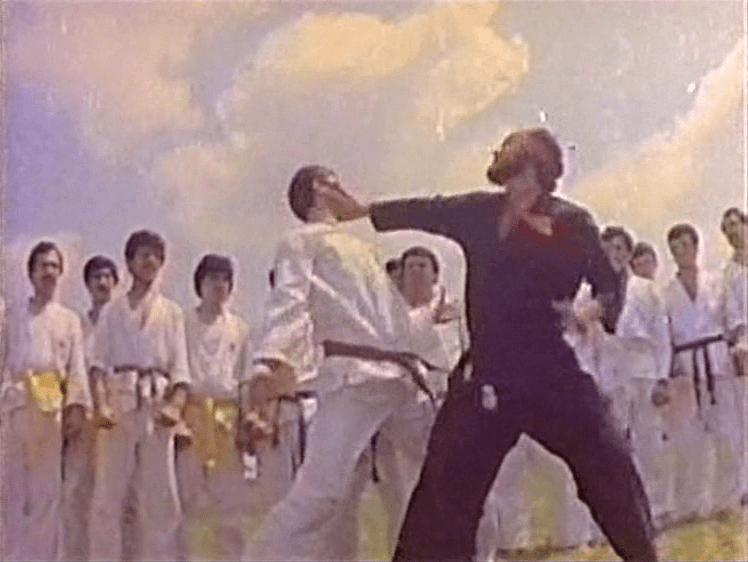

The use of collage is to make an entirely new film based on previously made footage. Breaking the previous film is a much-needed step. It’s a form of destruction and creation. Although many cases can be seen as a simple compilation, such as Joe Dante’s monolithic masterpiece The Movie Orgy, it can veer onto the other end of the spectrum, showing what may be seen as chaotic such as the work of Stan Brakhage. His methods are the very nature of film manipulation. Now, take the work of Godfrey Ho, of Ninja Terminator and Robo Vampire fame. What may be best described as “Trampoline Fu,” which is the use of a trampoline to create floating sort of stunts, as well as the collage method to make an efficient use of creating many films with a collage of original and found footage. Like Brakhage is to Dante, there is a director on the other end of Ho’s spectrum: Çetin İnanç with his film Ölüm Savaşçısı, or Death Warrior.
He is a director that has made quite a few of the so-called “Turksploitation” films alongside Cüneyt Arkın. They are known for making “bootlegs” of famous Western films, although they are only due to a technicality: the unauthorized use of the footage from those films. Their most popular film, The Man Who Saves the World, is nicknamed Turkish Star Wars due to them stealing footage from that film, despite the plot being completely different. Unlike that film, Death Warrior explores the type of collage film that reaches the point of film manipulation, akin to the paint methods of Brakhage – the very essence of manipulating film itself. It is simply the most mind-melting experience I’ve had with a film thus far.
Unfortunately, the only subtitles available are machine translated; however, it is the type of film that would still be incoherent despite having them be accurate. So, I will do my best to describe its plot. There are a group of borderline superhuman ninjas. They can breathe underwater, play dead, use sorcery, and can kill anyone easily thanks to the knowledge of some “weak points” that all humans have. They are wreaking havoc in what I believe is Germany, and during this one of the cops decides that only a Turkish person can fight them. This sounds like a fairly standard yet incoherent action film, perhaps one of the usual cases of an exploitation film. It’s not about the plot in this case. It’s the filmmaking aspects, its form, that makes for a wonderful yet mind-melting experience.
There are two versions online, and I prefer the lower quality one. It starts with an opening credit akin to the style of Peter Tscherkassky, one that seems like it’s going to fall apart at any second, with many of the words being roped. It then jumps straight into what may even be a jump scare. Straight into a man showing off martial arts with its chaotic and fast-paced editing style. The first training montage comes up, and that’s when the realization kicks in. They are warming themselves up, moving around a major character. Yet, there are sounds of them screaming, or them getting hit. It tries to sync up when it comes to the fight itself, yet it is for naught. It has failed in that regard. It already makes for a compelling interest to finish the film because on top of this the martial arts are incredibly inaccurate, coming off as cartoonish. It makes for an uneasy feeling.
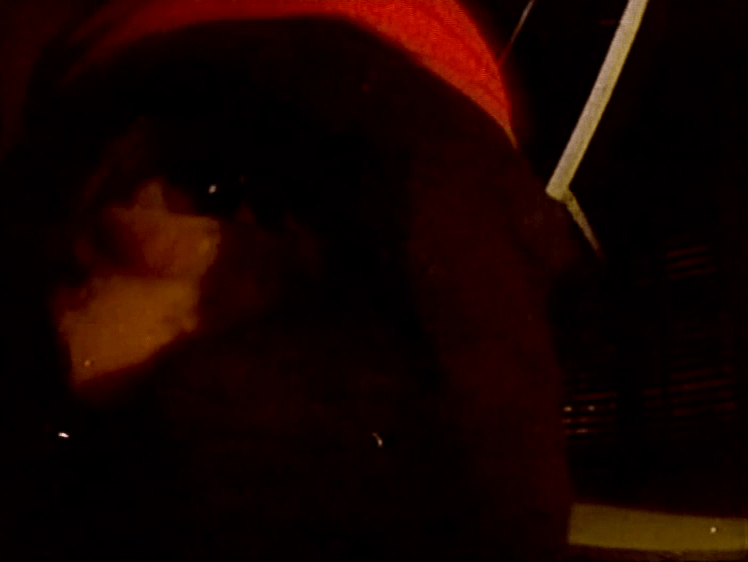
It establishes the skill of the Turkish cop in many regards, intercut with the skills of the ninjas doing murders elsewhere. Both go for their own chaotic approach. The Turkish cop has scenes of him doing car chases which consist of many unauthorized uses of found footage, with heavy colour filters on top, which reminds me a lot of the Canadian experimental scene. For the extreme stunts, toy models are used. When it comes to the ninjas, many different types of lenses and shooting styles are used interchangeably. It seems normal when it follows the person about to be killed, yet when the ninjas are floating around, it goes for a fish-eye lens that flies around the house, with shots that you will see multiple times throughout the film. When the ninjas then stumble upon their target, it consists of many extreme closeups of no one having any sort of facial expression, despite the threat. The target then gets slashed with a sword, and one of its most experimental techniques shows up. There is a very short shot of them screaming in pain, I’d say it’s around half a second, and they loop that 5-6 times in rapid succession, with the film itself looking like it is breaking apart during its loop to add some hard cuts. During either sequence, it then hard cuts to the cop hanging out with his girlfriend. No matter which previous scene it was, it is one of the hardest cuts I’ve seen in a film. The complete change of mood, and just how abrupt it all is.
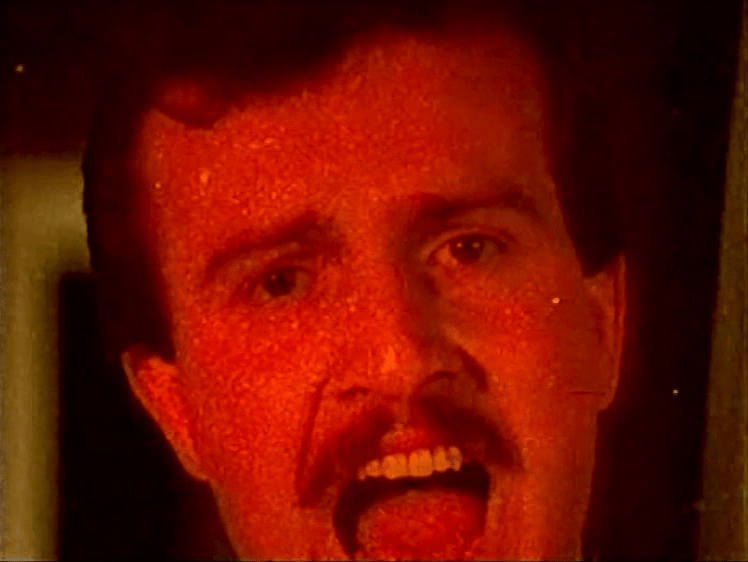
The fights get more extreme as they go on. Around the 30-minute point, you start thinking that it cannot get more ridiculous than this, yet it somehow accomplishes that every time. One highlight is a scene of him protecting cops while the playing dead ninjas resurrect themselves. Shots are constantly re-used during this, and the way the ninjas scream while they fly in the air is so inhuman and absurd. I wonder what source they took from it, but they sound like un-related samples from a kid’s cartoon.
I’m sure at this point, the collage comparisons become obvious. A car chase scene later shows three different cars in the same chase. One with different film speeds, with a very fast car flying through the camera looking like it was taken directly out of an experimental film. The off-sync use of the martial arts as well. Characters just doing warmups in their respective dojo have sounds of wind, people screaming, or them getting hit, even if they are just slowly moving their arms. It makes for an entirely new experience using footage that is pre-made. Taking stuff used directly from this film, reusing them, or footage from films messed around with, and creating a use of unease due to them being off-sync. It’s simply a collage used to make an otherworldly and uneasy approach to filmmaking. It is effective in that regard that it almost feels too much. Just 6 minutes of the film can have so much activity, that despite its running time being less than 70 minutes, I at times even wished it was shorter. There’s a reason why experimental films are usually short films.
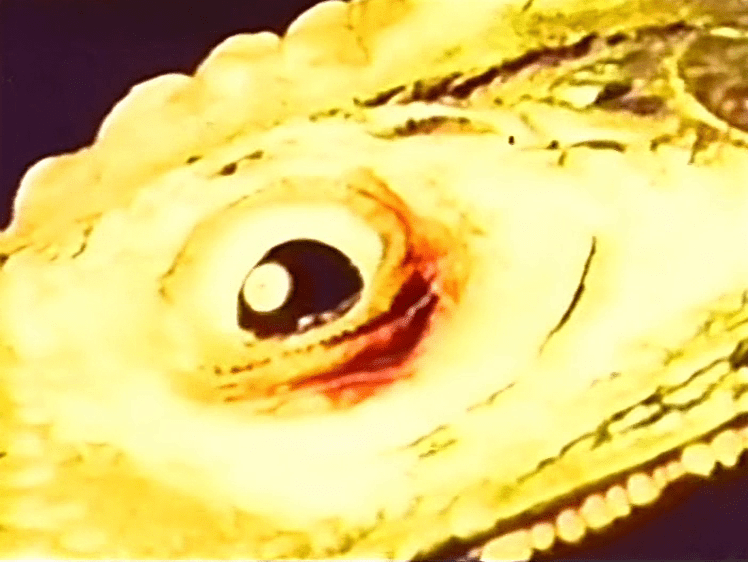
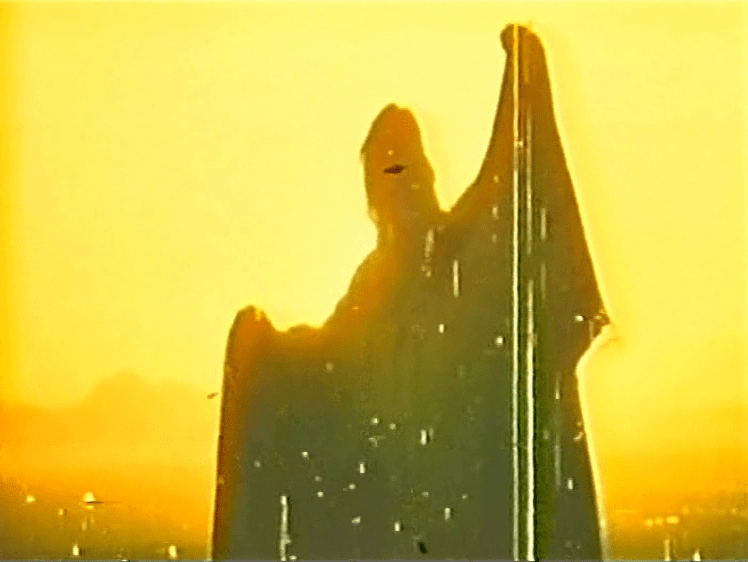
Skip this paragraph if you don’t want spoilers, but there is one scene at its most experimental, and at its most compelling. It has the villain in his dojo, with the sounds of him moving being sounds of breathing. It then goes to the hero of the story with what is simply incoherent sounds. It then cuts to him practicing with blades in multiple locations, and finally, a ninja in the field practicing. He then has a collage dream sequence of all the events he wasn’t present for. There are constant shots of him waking up and lying down again. There is then a montage that even includes a shot of someone’s feet, and extreme closeups of the ninja’s eyes. It felt like the work of Pierre Clementi. His house then becomes haunted. A chair rocks back and forth on its own, and the atmosphere is surprisingly well made. His girlfriend then comes into the room, which I should mention his girlfriend changed out of nowhere as well. It zooms in on her eye, and zooms out showing a fish, and she transforms into a decapitated fish head that flies to him and tries to kill him by biting his neck (yet she’s found in a closet shortly after). During this, what can simply be described as Merzbow’s music starts playing, and the fish head explodes as he throws it to a wall. He then sees what a moving statue with a colour filter is screaming like a demon. During this, he is starring out of a window, and a hurricane happens, once again using found footage of a major storm. It then culminates into a sped-up ninja attack where most shots were used in a previous fight scene. Due to the way all of this was presented, even if it is a very silly martial arts scene, it makes for a stunning and intense conclusion. Everything simply feels wrong during this segment.
If you want a more experimental approach to filmmaking, regardless of genre, this is for you. Scenes that feel sped up even if they are padded out. Music such as the famous Psycho theme being played while there is a dojo of many people practicing. Inhuman sounds from people screaming. Fulci-style horror of the supernatural sort. It uses Brakhage’s manipulation of the film itself, Clementi’s avant-garde psychedelia approach to camerawork and filters, and Bruce Connor’s sped up footage and his collage approach. It is an exhausting experience, yet one that I will never forget.
 Auteur Outlier
Leave a comment