
I always found the reputation of horror films to be amusing. While horror fans often say that critics are pretentious, it is often the horror fans that are less open-minded; giving lower scores on websites like imdb and letterboxd express this, with many praised horror films reaching scores below 5/10. As for cinephiles, many tend to go towards the classics, the hyper-stylized slashers such as giallos, and the term I despise: “elevated horror.”
Horror films, no matter how trashy they seem on the surface, are fascinating because they are direct responses to the social movements of their time. During the Silent Night, Deadly Night series, Reagan was president, and there were the comeback of the nuclear family and the anxieties of anything drifting outside of it: STIs, sex in general, and “blasphemous media” such as Dungeons and Dragons, and metal music, that would drift children towards Satanism. All children needed to go back to the family tradition. Horror films portrayed or subverted this through subtext. Others aim for a camp factor, achieve the pure horror aspect through disturbing content, or a moody piece that solely focuses on atmosphere.
The Silent Night, Deadly Night series is what I believe to be the quintessential horror series because it achieves many aspects of makes horror films, well, horror. It succeeds in the multiple types of horror that they aim to achieve, and because of that this is the quintessential horror series. Many famous ones tend to aim for a few entries with subtext, or subversion, such as Nightmare on Elm Street 2 or New Nightmare. Jason Goes to Hell was one that aimed for a completely different approach to the series, and although it was hated that was the reason why I found it so refreshing.
I believe that Silent Night, Deadly Night is hated for this reason. Some have nothing to do with the rest of the series, and one is a so bad it’s good entry, yet that is what makes this series so special to me. I hope to provide a convincing case as to why it’s worthy to have a marathon of this for Halloween.
Christmas Eve is the Scariest Damn Night of the Year! (Part 1)
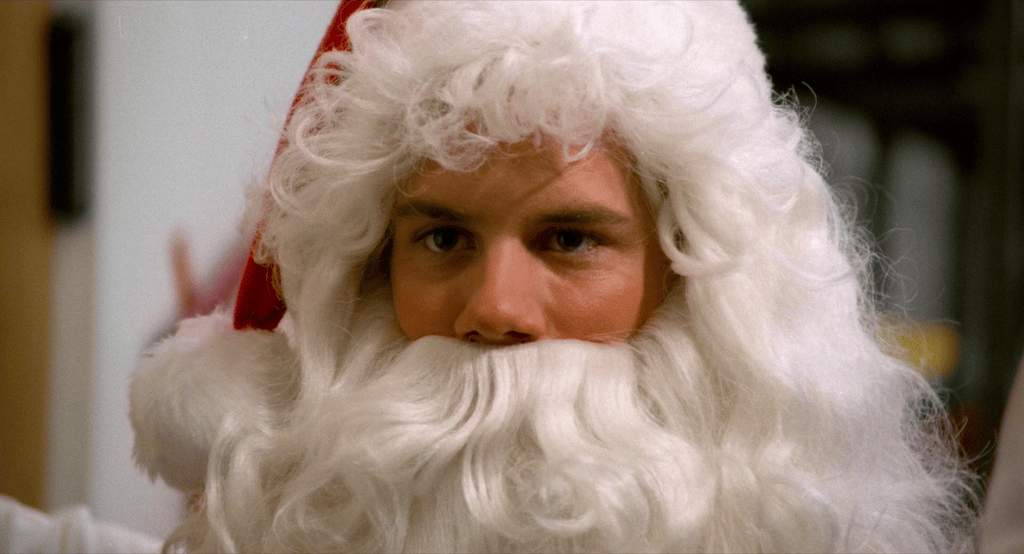
The first entry is the most straight-forward one of the series, yet one that provides an interesting response to Reagan-era America: the traditional family. A family with two children, Billy and Ricky were faced with trauma as the father was shot, and the mother was raped and had her throat slit by a man who was dressed as Santa. They both then go into a religious orphanage, where the Mother Superior is incredibly abusive to the older brother Billy, saying such lines as “Punishment is good.” It could be seen as a plot hole that Mother Superior is never in trouble for doing this, especially since another nun is trying to help him. However, this is needed to show how the use of tradition is slowly destroying him. It is established that he constantly on edge when Christmas is around, because of the trauma from childhood, as well as seeing a couple having sex which he associates it with the memory of his mother being raped.
Despite all of this trauma, the orphanage finds him a job, and everything goes smoothly until Christmas time shows up. Both of his triggers become overwhelming for him, and then he goes into your typical 1980s style slasher killing spree.
All of this falls into the psychological aspects of trauma, and the 1980s culture of Traditional America. The use of Christmas is an obvious one. In the opening scene he meets his Grandpa who tells him of the true story of Christmas, where naughty kids get punished. It is one that is whitewashed in North America where you don’t hear stories about Krampus. Billy was terrified of hearing of the punishment aspect of traditional Christmas, and right after the family murders happen, he would associate tradition with this. It is then made even worse by the church in the Orphanage. Mother Superior states that the true meaning of Christmas is gone, a holiday reduced to “greed”. As Billy is punished, it gives a sort of Opus Dei dynamic. One where punishment is retribution for atoning your sins. As he became more triggered during Christmas, that was when these punishments were happening, thus increasing the severity of that trigger. In regard to the sex, it is associated with rape, but in the other aspects it falls into the sex = death angle that was prevalent in 80s horror. It was a sort of fear tactic used for the STI scare.
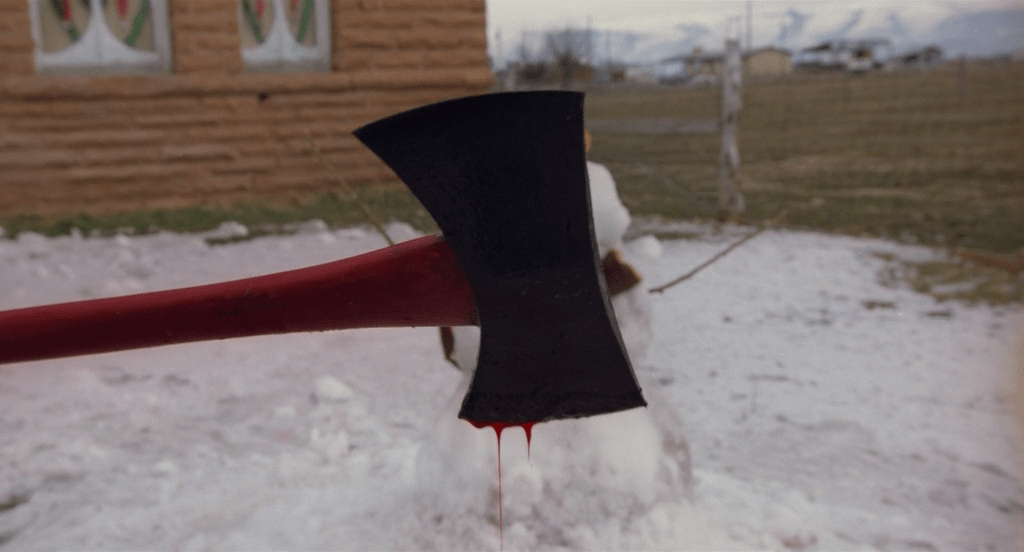
As he had to dress up into a Santa outfit for work, this is where it all falls apart. It was as if the tradition of Christmas took him over completely, and he would stop at nothing to continue said tradition, and like Mother Superior and the criminal Santa at the beginning, force it upon others. This is especially prevalent as many of the kills are thematic of Christmas: someone being impaled by antlers, like a Reindeer’s, toys from a kids store, or Christmas lights. The axe is the most common weapon, and although that may not be seen as thematic on the surface, I believe it could be connected to its use for Christmas by cutting down all the trees to sell for the holidays.
This film excels in showcasing trauma. This aligns with psychological findings; according to the National Library of Medicine, those that have trauma may repeat it as it leads to hyper-arousal states1. It is as if it becomes a sort of comfort of repeating it afterwards. I believe that this film shows this aspect well. It may not reach essential horror status as it lacks an even more in-depth analysis of some psychological horrors during the time, or a more stylistic approach, it is still one that reaches quintessential status.
Garbage Day! (Part 2)
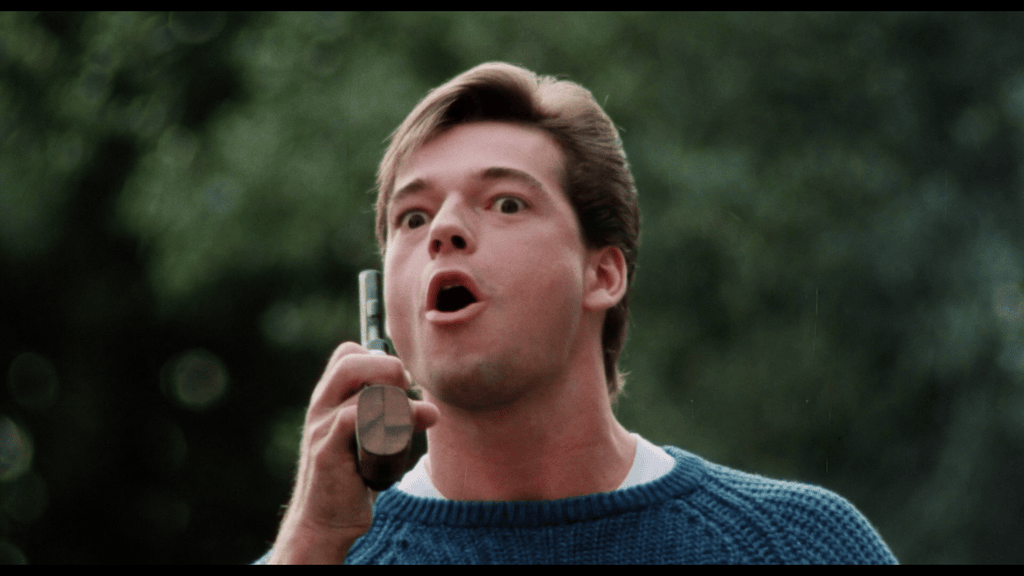
Part 2 is its infamous entry, and one that is hard to figure out if it aims for a horror comedy, or if it’s completely unintentional. One that became a viral sensation for the infamous “garbage day” scene. I am one that appreciates kitsch with cinema, yet this is one that completely fails. Still, it’s interesting to look into this through a more historical background. How these sorts of films came into existence. It is a quintessential example as to how these cash-grab films were made during the era, making an entry that is representative of another aspect of 80s horror.
This film follows the younger brother Ricky while being interviewed by a criminal psychiatrist. This may be seen as the set up for how he got to this in the first place. You’d think it would be something that was parodied in a film like Freaky Farley, yet this is even worse. The first half of the film is basically an abridged version of the first film. Literally the first half of the film is footage from the first film inter-cut with a voice over of Ricky, and short segments of him in the clinical room with the tape recorder. The final credits is also much longer than usual, as they decided to include the cast and crew for both films to pad more running time. Yes, this is a full-blown cash grab.
Initially this film was going to consist entirely of flashbacks with the few segments of Ricky in the asylum. The screenwriters wanted at least some semblance of a film and were able to partially do so despite the minuscule budget. However, this was a case where the crew are the ambitious sort of SOV-filmmakers that you would see in a few films. Director Lee Harry wanted this work to still come across as professional as possible, which is a hindrance for budget that was meant to be a cash grab. Could it be the case of the producers forcing it as well? That is also likely, but one that makes a disastrous result either way.
This was made slightly tolerable by the performance of Eric Freeman, playing the brother Ricky. His acting style was a mixture of taking his role seriously yet full of kitsch. It felt intentional with the way he delivered his lines with a deadpan delivery that is full of strange inflections, until it of course all falls apart and he goes completely manic. There was also a certain meta element that I appreciated, with them watching a film where Ricky finds out at the last minute that it’s the first part. It could be seen as psychological, but it was confirmed by his girlfriend.
Although I personally believe it is not worth seeing, the kitsch may work for some to help it reach the “so bad it’s good category” for them. The historical background of this works as well; however, I find the work of Full Moon Productions to be more effective in that regard. In the end, the fact that part 3 has an even lower imdb score than this is telling as to how the horror fanbase considers this genre.
Laura… (Part 3)

The third entry, Silent Night Deadly Night 3: Better Watching Out, is amusing for a few reasons. It is the most hated entry in the series, but one that is made by the most praised director: Monte Hellman. He was known for doing “the existentialist westerns” such as The Shooting, known for its slow-pacing and to aim for a mood piece of a genre that usually doesn’t require it. Although horror is known for its mood pieces, one that holds this sort of atmosphere felt quite rare to me, especially in its first half. It is one that I’d consider essential for those who enjoy anything surreal.
This felt Twin-Peaks adjacent, an interesting comparison as this came out a year before. It has 3 actors known to be in Lynch’s work: Laura Harring, Eric DaRe, and Richard Beymer. The lead, the most vulnerable person and the final girl, is named Laura, as per the name of the victim in Twin Peaks. This also contains a similar atmosphere thanks to its surrealism and overall dream logic, a few scenes that are effective in the sense of being pure horror, and the moments of comic relief that despite the vibes of the overall film, it still felt suitable.
In this entry, the character Ricky is still alive, but comatose, and went through a brain-repairing surgery that resulted in his brain being exposed and covered in a glass dome. During this state, they use the assistance of Laura, a blind psychic, who enters Ricky’s mind through their dreams. This eventually results in Ricky waking up, and as they have a psychic connection with each other, he’s slowly making his way towards Laura, doing a killing rampage on the way.
The first half makes for an excellent use of symbolism to represent the psychology of the lead characters, and to aim for a mood piece. The dream sequences show Ricky’s Christmas triggers, which includes a few, thankfully, much shorter flashbacks than in Part 2. Everything about it feels so clinical unlike the usual aspect of dreams. It represents that the connection between them is what inspires these dreams, and the purpose of it is to basically expose Ricky, to wake him up in a sense. Although overt, showing his brain is a clever way of representing how the hospital has his mind exposed, and wanting to use for their experiments. To make sure he “wakes up” in a sense, it provides an interesting use of Laura being blind. It could be seen as her being the end of the requirements of Ricky waking up. The blind woman being the final step.
It does lose a bit of interest as it drifts more towards slasher territory over this, but by having the psychiatrist and the cop trying to catch Ricky, the banter between them is more on the philosophical and ethical ends of why the experiments are being done, thus keeping the engagement of the audience. Not to mention that the banter between them is simply entertaining, with witty yet realistic lines.
What surprised me is how effective the slasher part still was with the overall atmosphere of the film. As it was very slow and ethereal, there was also that feeling that something is off, and the stakes of them trying to survive literally pops in out of nowhere, with no immediate warning until Ricky’s arm busts through a door in a jump scare. During this, it’s a barebones slasher, aiming for a more visceral response from the audience. It even aims to subvert the usual expectations which are spoilers, yet they provide the usual moments of relief and then turn them upside down. As Laura becomes the final girl, I enjoyed that the TV was playing Roger Corman’s The Terror, specifically the scene where someone loses their eyes after it was pecked out by birds. Like that character, the final girl is now blind and on her own.
This is the “vibes” entry of the genre. I assume it’s hated because of this, aiming for a slower pace that feels like something’s always wrong. It also has very little to do with the franchise outside of Ricky being a killer again. However, this is what spark my interest Hellman was risky with this one, and I believe it was successful. As great as a lot of his filmography is, he states that this was his best film, and considering how different it is for him, I can understand why.
Why Do We Need Men Anyway? (Part 4)
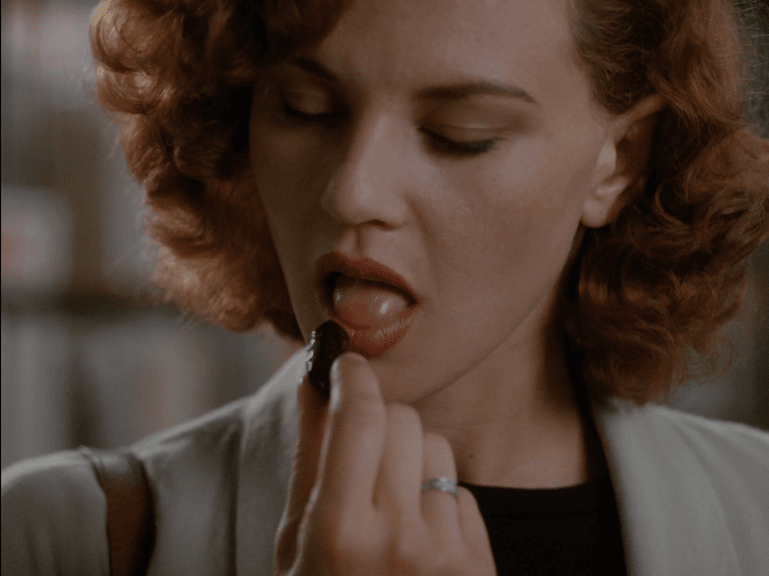
Silent Night Deadly Night 4: Initiation is the one that has so little to do with the series that it’s not even considered a sequel in the UK. The film there is simply titled Bugs. I believe this is why it’s a hated entry; however, it is not only my favourite entry in the series, or Yuzna’s best, but I’d considering this an essential horror film.
It follows Kim, an investigative journalist, who despite being put down by her male coworkers and is reduced to doing classifieds, does a mysterious case of a woman jumping off a roof while being on fire. This leads her to a witch’s coven that wants to initiate her as she has a semblance to the leader’s daughter.
It goes for an interesting angle as it seems like it was trying to come across as misogynistic as possible. The coven is quite evil with them taking advantage of other people for their own personal gain, and human sacrifice is common amongst them, as well as some disturbing body horror. However, it somehow goes full circle and comes across as showing them as more empowering. She initially uses her powers to gain the respect of her sexist boss, who decides to give her the case alongside a coworker, who unfortunately enough is her boyfriend. He also seems to be more interested in her, finally standing up for her.
Of course, it’s not going to go smoothly. This entry is effective at yet another type of horror film that fans look out for: horror at its most pure. This is the one that the audience will fear. The violence can be extreme, the visceral nature of some initiations can be triggering, and some aspects reach the point of it being more out there than Cronenberg. Brian Yuzna and Screaming Mad George, who were made famous by the film Society, are involved in this, which I believe gives a good picture.
In the beginning of her journey, her apartment is infested with cockroaches to the point that she has a bug killing spray on standby beside her sink. As she discovers the coven, she gets stalked by even more cockroaches in her apartment, which at the end leads to a cockroach so large that it’s reminiscent of the lead character in Metamorphoses. This alone would disturb anyone with a fear of bugs, and it only gets worse from there.
One of the first steps of the initiation involves a giant maggot being inserted into her groin, and it comes out of her mouth as a fully grown insect before being killed. It may be seen as just horror for horror’s sake, yet despite its disturbing nature it is one with an interesting purpose to it. Bugs in dreams represents our fears and anxiety, as shown by her constant fear of cockroaches in the beginning that was slowly overwhelming her with the giant cockroach. By having one give birth in her body before getting sacrificed, it was a way of giving her exposure therapy, ending it with killing the very thing she feared. It was then that the powers started coming. As she gets closer to the final step, the steps get even more disturbing, with instances of prosthetic-heavy body horror, and a scene of sexual assault with yet another phallic aspect to it like the maggot which consisted of the rapist wearing a phallic mask during the ritual.
It all slowly builds up in intensity and was honestly one of the few horrors to truly scare me. This film knew how to keep the pacing going to not overwhelm the viewer, and how to slowly yet consistently reveal the horror aspects, which would give a visceral reaction to the audience. It doesn’t reach the point of pure horror compared to a film such as The Texas Chain Saw Massacre, but it’s close.
There’s Always Great Gifts for the Holidays! (Part 5)

Silent Night, Deadly Night 5: The Toy Maker is another entry that I find underwhelming, yet one that fits into another mold of direct-to-video horror: fan service, and one that, although is rated R is clearly made with kids in mind. It’s lighter on the sex and violence, and the use of killer toys is one that kids will find freaky yet entertaining enough.
In this film, Mickey Rooney plays a toy store owner who makes booby trapped toys to kill children, which isn’t the biggest shock as it is well established early on that he is abusive to his son. They do provide a decent enough twist with who is the villain in this later. One that is enough to shock people yet isn’t completely out of the realm of possibility in this film’s universe.
The fascinating aspect of this is the use of fan service. It is at the point that I’d almost call this a self-reflexive film. Kim, the lead from part 4, is back but with an adopted son. The creepy man Ricky is here but has a minor role where he’s no longer a villain and works as a Santa. One of the evil toys is a sort of maggot reminiscent of the ones from part 4. There is also yet another Yuzna reference, of a little girl wanting a copy of Bride of the Re-Animator for Christmas.
The toys are fun to watch. They have enough variety, and all have this over-the-top nature such as a tank shooting real pellets, or a hand that gropes people that is entertaining. It helps provide this child-like nature for the film, as that is the whitewashed aspect of Christmas, and fits the overall theme of the tradition of Christmas being lost, with everyone just focusing on the presents, especially children. It reminded me of Xtro, yet the opposite as that one created life-sized toys that were alive.
Despite the killer toys, it is light on the violence, especially in regard to the series, and one that is more kid-friendly as their reactions to seeing stuff they get on Christmas being evil will illicit fun reactions from them. Depending on the parents, the sex in this may not be too unsuitable for them either. It is never explicit, and never reaches “that” point, as in both scenes they get interrupted. Because of this, I think this would have been the perfect film for 12-13 year old children to watch during a sleepover.
However, this was an underwhelming experience for me. It takes too long to get started, and this is a sort of horror film that I don’t find interesting. Although it is child-like, it misses the low-brow sense of humour that I admittedly enjoy, and because it is not interesting in the other aspects as the rest of the series is, it is basically down to the adults finding its self-reflexive nature to be the aspects “for them.” Basically, the same as a film like Lego Batman that has references here and there of adult media. In the end, this still fits into the mold of other horrors of the era, thus making it quintessential.
Santa’s Coming to Town

This series is far from perfect. I only find one to be a masterpiece, and two entries are quite underwhelming. However, each one covers a certain aspect of 80s and early 90s horror that helps provide a sort of primer, especially through a historical perspective. The typical slasher elevated by its psychological aspects, the obvious cash-grab, the ethereal mood piece, the pure horror, and finally the kid-friendly horror film. This series perfectly encapsulates not only the horror umbrella, but rather the subgenres that are reminiscent of horror films at the time. As each piece of ground is covered, this is the quintessential horror series.
Sources Used:
 Auteur Outlier
Leave a comment